Rehearsing for the Unthinkable: The Case for Making Crisis Communications Simulation a Boardroom Priority

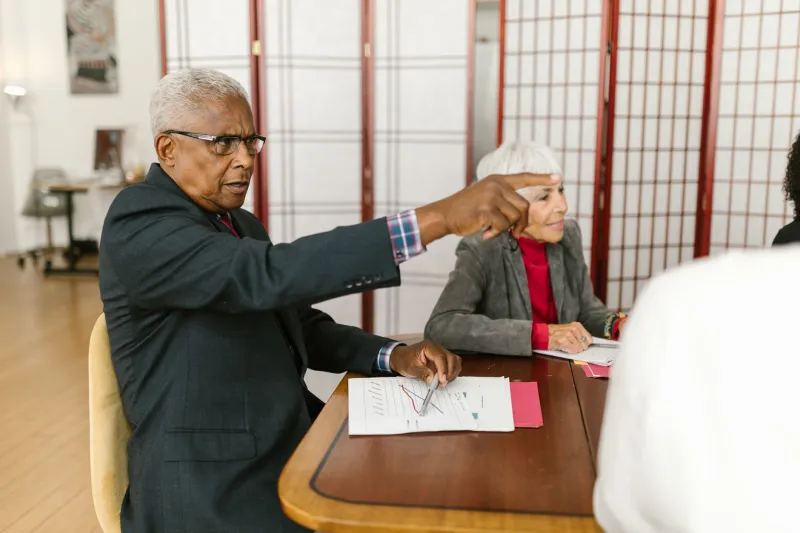
Photo: corporate boardroom crisis management strategy meeting UK executives, via gondaliyacpa.ca
Ask the board of almost any major British company whether they have tested their financial resilience under adverse scenarios, and the answer will be affirmative. Stress tests, scenario planning, liquidity reviews — these are standard features of responsible governance, embedded in regulatory expectation and institutional practice alike. Ask the same board whether they have rehearsed their communications response to a reputational emergency, and the answer will, in the majority of cases, be rather less confident.
This asymmetry is not incidental. It reflects a persistent belief, rarely articulated but consistently acted upon, that communications is a reactive discipline — something that is managed in the moment by the appropriate professionals, rather than a capability that requires the same deliberate cultivation as any other critical organisational function. The belief is wrong, and the consequences of maintaining it are becoming harder to ignore.
The Governance Blind Spot
Crisis preparedness has, in recent years, moved firmly onto the British boardroom agenda. Cyber resilience, operational continuity, supply chain disruption — these are now subjects of serious board-level attention, with dedicated resources, external advisers, and regular review cycles. Reputational crisis communications, however, occupies an awkward position in this landscape. It is acknowledged as important but rarely treated with the same structural seriousness.
Part of the explanation lies in the nature of the risk. Financial and operational risks have established frameworks for quantification; reputational risk resists easy measurement, and what cannot be measured is frequently underinvested. Part of it lies in professional demarcation — crisis communications is perceived as the domain of the communications director or the retained PR agency, not a matter of board-level competency. And part of it lies in a cultural reluctance to rehearse failure, even hypothetically. British boardrooms are not, on the whole, naturally comfortable with exercises that expose gaps in their own performance.
None of these explanations constitute justifications. They are, collectively, a description of how organisations arrive at the worst possible moment — a live reputational crisis — without having prepared for it.
What Happens When Preparation Is Absent
The pattern of a poorly managed reputational crisis is, by now, sufficiently well-documented to be instructive. The initial response is delayed while internal consensus is sought. When a statement does emerge, it is hedged to the point of meaninglessness — the product of legal caution and communications uncertainty operating simultaneously under time pressure. The spokesperson, often a senior executive with no recent experience of adversarial media engagement, performs poorly in front of cameras or microphones. Subsequent communications are inconsistent as different parts of the organisation respond to different pressures. Stakeholders — investors, employees, customers, regulators — receive different messages, or receive nothing at all, and fill the vacuum with speculation.
Each of these failure modes is, without exception, addressable through preparation. Not through the preparation of a written crisis communications plan — though such plans have their place — but through the active rehearsal of the human and organisational behaviours that a crisis demands.
The Distinction Between Planning and Simulation
British organisations that have engaged with crisis communications preparedness at all tend to have done so primarily through documentation. Crisis communications plans exist, sometimes in considerable detail. They specify decision-making hierarchies, holding statement templates, media contact protocols, and stakeholder notification sequences. They are, in many cases, well-constructed documents.
They are also, in most cases, largely untested. And the gap between a plan on paper and a plan in practice is where reputational crises are won and lost.
Simulation exercises expose what documentation cannot reveal: how individuals perform under pressure, where decision-making authority actually resides when time is short, how quickly the organisation can move from event to coherent public communication, and where the plan's assumptions do not reflect operational reality. They surface the interpersonal dynamics — between the chief executive and the legal team, between the communications director and the chair — that will determine how effectively the organisation responds. None of this is visible in a written plan. All of it is critical.
What Effective Crisis Simulation Looks Like in Practice
The most effective crisis simulation exercises share several characteristics that distinguish them from box-ticking compliance activity.
They are realistic in scenario design. A simulation built around a vague and hypothetical threat teaches little. Scenarios should be drawn from the genuine risk register of the specific organisation — the product failure that could plausibly occur, the regulatory investigation that corresponds to an actual area of regulatory attention, the executive conduct allegation that reflects a real vulnerability in governance. Discomfort in scenario design is a feature, not a flaw.
They involve the right people. Crisis communications simulations that are conducted exclusively by communications teams, without the participation of the chief executive, chair, legal counsel, and relevant operational leaders, are exercises in professional development rather than organisational preparedness. The individuals who will make decisions under pressure must be the individuals who rehearse under pressure.
They test the full communications cycle. Effective simulations do not focus only on the initial public statement. They run through the complete arc of a crisis response — the first hours of internal decision-making, the initial holding position, the full statement, the media appearances, the stakeholder briefings, the employee communications, and the longer-term narrative recovery. Each stage carries distinct challenges and distinct failure modes.
They are followed by rigorous debrief. The simulation itself is only as valuable as the learning that follows it. Debriefs should be structured, honest, and conducted by facilitators with sufficient independence and professional authority to surface uncomfortable findings without diplomatic softening.
Making the Case to the Board
For communications professionals seeking to elevate crisis simulation to a genuine boardroom priority, the most effective argument is not one of professional best practice — it is one of fiduciary responsibility.
The board's duty to protect the long-term interests of the organisation extends to its reputation. In an environment where reputational damage can translate directly and rapidly into financial consequence — through customer attrition, regulatory sanction, investor withdrawal, or talent departure — the failure to prepare the organisation's communications capability for crisis conditions is not a communications oversight. It is a governance failure.
The organisations that emerge from reputational crises with their standing intact are not, in general, those that were fortunate enough to face manageable crises. They are those that had rehearsed, understood their own vulnerabilities, and built the human and organisational capability to respond with speed, coherence, and authority.
That capability does not materialise in the moment. It is constructed, deliberately and in advance, by organisations that have understood that the time to prepare for the unthinkable is before it becomes unavoidable.