The Long Microphone: Why Britain's C-Suite Is Discovering That Podcasts Punish the Unprepared
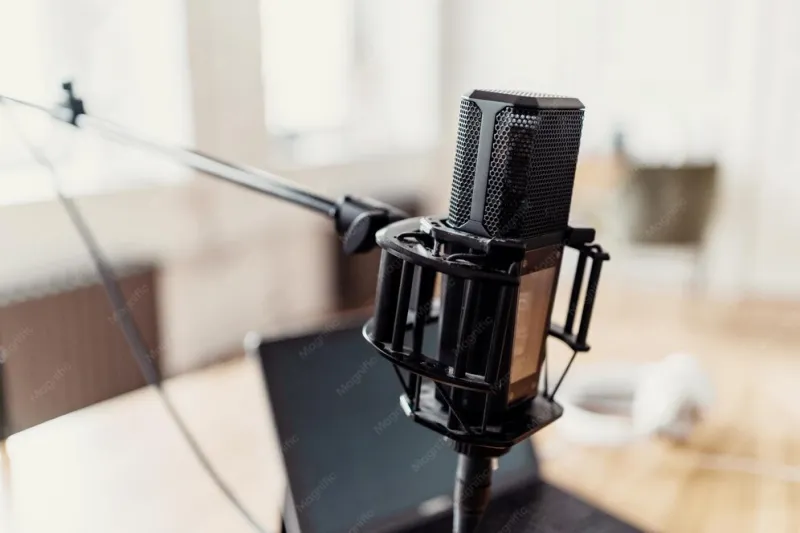
Photo: professional podcast recording studio microphone executive interview, via img.freepik.com
The Long Microphone: Why Britain's C-Suite Is Discovering That Podcasts Punish the Unprepared
There is a particular comfort that senior executives report when they first encounter the podcast studio. No adversarial presenter. No ticking clock. No fear of being interrupted mid-sentence by a Radio 4 journalist who has already decided the narrative. The podcast, in the minds of many British business leaders, represents a communications environment finally calibrated to their advantage — a space where nuance is permitted and context is king.
They are, in significant measure, wrong.
The Illusion of the Safe Harbour
The appeal of long-form audio is understandable. When the dominant broadcast experience for a British executive involves a Today programme ambush or a Newsnight confrontation engineered for dramatic effect, the prospect of sitting across from a sympathetic host for ninety minutes feels like relief rather than risk. Audiences for business podcasts — whether industry-specific productions or the broader leadership and entrepreneurship genre — tend to be self-selecting, engaged, and broadly well-disposed toward their subjects.
Yet this apparent safety is precisely the condition that generates complacency, and complacency in communications is invariably expensive. The very features that make podcasts attractive — duration, informality, and the conversational register they encourage — are the same features that create new and underappreciated vulnerabilities.
A broadcast interview lasting four minutes offers limited surface area for error. A podcast conversation extending to an hour or more offers an almost unlimited one. The executive who successfully navigates a Sky News studio grilling may find themselves far more exposed in a Shoreditch recording booth, where the absence of obvious pressure invites unguarded candour.
 Photo: Sky News, via content.api.news
What Unscripted Hours Actually Cost
The communications failures that emerge from podcast appearances rarely arrive in the form of dramatic gaffes. More commonly, they accumulate through the slow erosion of message discipline that extended, relaxed conversation produces. An executive might offer a speculative view on a competitor's strategy in passing. They might acknowledge internal tensions with a rueful laugh that reads very differently in a written transcript. They might, crucially, make a claim about their organisation's future direction that has not been through any governance or legal review — because the conversational context made it feel like informal musing rather than public statement.
None of this is hypothetical. British business journalism has grown increasingly adept at mining podcast back-catalogues for material. A remark made in episode forty-seven of a niche industry podcast can resurface months later in a national newspaper investigation, stripped of its conversational context and placed alongside contradictory corporate statements. The executive who believed they were speaking to a specialist audience discovers, belatedly, that every podcast is effectively a press release with a play button.
The Strategic Calculus Before Saying Yes
For communications professionals advising C-suite clients, the first discipline is not preparation for the podcast itself — it is interrogating whether the podcast appearance is strategically warranted at all.
Several questions should precede any commitment. Who is the host, and what is their editorial track record across previous episodes? What is the realistic audience composition, and does it align with the organisation's current communications priorities? Is there an active issue — a regulatory inquiry, a pending transaction, a contested public narrative — that creates material risk in any extended, unscripted conversation? And critically: what is the executive hoping to achieve that cannot be achieved through a more controlled medium?
These questions are not counsel against podcast participation. Long-form audio offers genuine strategic value when the objective is thought leadership, talent attraction, or building the kind of humanised executive presence that traditional corporate communications rarely produces. The medium rewards authenticity in ways that scripted press releases cannot replicate, and that authenticity, when managed intelligently, builds the sustained reputational capital that British business leaders increasingly need.
The discipline lies in approaching that authenticity as a craft, not a consequence.
Preparing for Conversations, Not Interrogations
The preparation frameworks developed for broadcast media translate poorly to the podcast environment. Bridging techniques designed to redirect hostile questioning feel artificial and evasive in a conversational context. The three-message discipline that serves an executive through a two-minute broadcast clip becomes a straitjacket across ninety minutes of free-ranging discussion.
Effective podcast preparation requires a different architecture. Rather than message boxes, the executive needs a clear understanding of their conversational boundaries — the subjects on which they can speak freely, the areas requiring careful handling, and the topics that must be declined gracefully rather than navigated awkwardly. This is not about manufacturing inauthenticity; it is about ensuring that the executive's genuine voice operates within a framework that protects both the individual and the organisation.
Practical preparation should include extended dry-run conversations, not briefing documents. The executive should be practised in the art of the considered pause — the moment of reflection that prevents the verbal wandering that long-form audio so readily encourages. They should understand that the most dangerous conversational territory often arrives not in the first thirty minutes, when both parties are still establishing rapport, but in the final third of a long interview, when fatigue and comfort conspire to lower defences.
The Transcript Is the Record
Perhaps the most important shift in mindset that communications professionals must instil in executive clients is this: the podcast is not a conversation. It is a document.
Everything said in a recorded interview — however casual the atmosphere, however warm the relationship with the host — exists permanently and is searchable, quotable, and contextually portable. The moment British executives internalise this reality, their approach to long-form audio changes fundamentally. They begin to understand that authenticity and discipline are not in tension; the most effective podcast contributors are those who have done sufficient preparation to speak genuinely and specifically within understood parameters.
The podcast podium is a genuine opportunity for British business leaders willing to approach it with the same strategic rigour they would bring to any other significant communications commitment. The executives discovering its value are right to do so. The executives treating it as a holiday from message discipline are accumulating risk they have not yet been asked to pay for.
That invoice, in communications, rarely arrives with advance notice.