The Authenticity Audit: When Britain's Executive Voices Aren't Their Own

The Invisible Industry
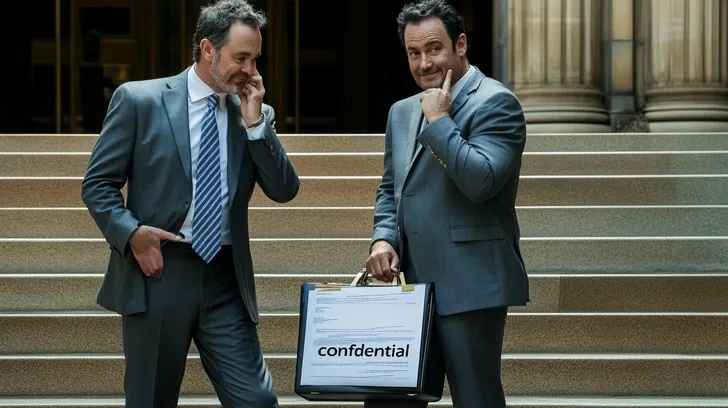
Beneath the polished veneer of British executive thought leadership lies an uncomfortable truth: much of what appears under senior business leaders' names has never crossed their desks, let alone emerged from their strategic thinking. The UK's ghostwriting industry has evolved into a sophisticated ecosystem where agencies craft executive insights, LinkedIn articles, and conference keynotes that bear little resemblance to their attributed authors' actual expertise or opinions.
This practice, whilst not inherently unethical, has created a precarious foundation for executive reputation management. When the gap between authentic executive thinking and published content becomes too wide, the potential for reputational catastrophe increases exponentially.
The Architecture of Artificial Authority
British communications agencies have become remarkably adept at manufacturing executive thought leadership. The process typically begins with brief client consultations, where busy senior leaders outline general strategic themes. These conversations, often lasting no more than thirty minutes, provide the raw material for months of published content bearing the executive's name.
The resulting articles, posts, and presentations follow predictable patterns. They reference current industry trends, cite relevant statistics, and offer strategic insights that sound authoritative but remain sufficiently general to avoid specific commitment. The tone mimics executive communication whilst carefully avoiding the personal quirks, specific experiences, and genuine intellectual positions that characterise authentic leadership voices.
This manufactured authority has become particularly prevalent on LinkedIn, where British executives publish multiple articles weekly despite demanding schedules that realistically permit minimal writing time. The platform's algorithm rewards consistent publishing, creating pressure for regular content that few senior leaders can personally sustain.
The Credibility Time Bomb
The risks inherent in this approach extend far beyond questions of intellectual honesty. When executives become disconnected from content published under their names, they become vulnerable to public contradiction, factual challenges, and attribution disputes that can devastate professional credibility.
Consider the scenario where a senior executive, speaking at an industry conference, contradicts positions outlined in articles bearing their name. Or when detailed questions about published research reveal that the supposed author lacks familiarity with their own stated methodology. These moments of exposure, increasingly common in Britain's interconnected business community, can instantly undermine years of carefully constructed thought leadership.
The problem intensifies when ghostwritten content addresses controversial topics or makes specific predictions that subsequently prove incorrect. The executive bears full reputational responsibility for positions they may never have considered, let alone endorsed. This disconnect between attribution and authenticity creates ongoing vulnerability that sophisticated stakeholders increasingly recognise and exploit.
The Sophistication of Scrutiny
British business audiences have become remarkably sophisticated at identifying inauthentic executive communication. Journalists, industry analysts, and professional peers can detect the telltale signs of ghostwritten content: generic insights that could apply to multiple industries, absence of specific experiential details, and communication styles that shift dramatically between published articles and live presentations.
Social media has amplified this scrutiny exponentially. When executives share ghostwritten content, engaged audiences often respond with detailed questions that reveal the author's limited familiarity with their supposed insights. These public exchanges, visible to entire professional networks, can expose the artificial nature of executive thought leadership with devastating efficiency.
The rise of artificial intelligence has paradoxically made authentic executive voices more valuable whilst simultaneously making artificial content easier to produce. Stakeholders increasingly seek genuine executive insights that reflect personal experience and specific strategic thinking, precisely the elements that ghostwriting services struggle to authentically replicate.
The Regulatory Dimension
For executives in regulated sectors, ghostwritten content creates additional compliance risks. Financial services leaders, for example, must ensure that all published content meets FCA requirements for fair and balanced communication. When executives lack detailed familiarity with ghostwritten articles bearing their names, they cannot reasonably ensure regulatory compliance.
Similarly, legal sector executives face professional conduct requirements that demand personal accountability for published opinions. The Law Society's guidance on professional communication assumes that attributed content reflects genuine professional judgment, an assumption that ghostwriting arrangements may violate.
 Photo: Law Society, via images.credly.com
These regulatory frameworks increasingly expect executives to demonstrate personal knowledge of content published under their names. Ignorance of ghostwritten material provides no protection when regulatory investigations or professional conduct reviews examine executive communications.
Reconstructing Authentic Authority
The solution requires fundamental recalibration of executive thought leadership strategies. Rather than outsourcing intellectual content creation, communications professionals should focus on capturing and amplifying genuine executive insights through more authentic processes.
This approach begins with recognising that effective thought leadership requires less frequent but more substantial executive investment. Instead of weekly ghostwritten articles, executives might publish monthly pieces that genuinely reflect their strategic thinking and professional experience. The reduced frequency allows for authentic personal involvement whilst maintaining consistent public engagement.
Communications teams can support this authenticity by developing better capture mechanisms for genuine executive insights. Regular strategic debriefs, recorded reflections on industry developments, and structured interviews about specific business challenges can provide authentic source material that maintains the executive's genuine voice and perspective.
The Strategic Alternative
Sophisticated communications strategies can achieve thought leadership objectives without compromising executive authenticity. This requires shifting focus from content volume to content quality, emphasising genuine insights over generic industry commentary.
Executive communications should leverage specific professional experiences, detailed industry knowledge, and personal strategic perspectives that competitors cannot easily replicate. This approach produces thought leadership that strengthens rather than threatens executive credibility whilst providing genuine value to professional audiences.
The most effective executive thought leadership emerges from authentic engagement with strategic challenges, not from communications agencies manufacturing insights on executives' behalf. British business leaders who invest personally in their thought leadership strategies will find their authentic voices increasingly valuable in an environment where artificial authority faces growing scrutiny.
The choice facing British executives is stark: invest authentically in thought leadership or risk the reputational consequences when artificial authority meets sophisticated scrutiny. The communications professionals who guide this decision will determine whether executive thought leadership strengthens or undermines the reputations they are meant to protect.